If you have been wondering whether hyperbaric oxygen therapy might be right for you, you are not alone. Interest in HBOT has grown significantly over the past decade as more people discover how powerfully it supports the body's natural healing process. Whether you are recovering from a sports injury, managing a chronic condition, or exploring options after a neurological event, or even an autoimmune condition, understanding the range of conditions that hyperbaric oxygen therapy can address is a great place to start.
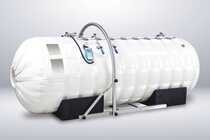
At Summit Sports and Spine in Lehi, UT, we offer one of the strongest soft-shell hyperbaric chambers available anywhere in Utah County or Utah. Our AHA Flex 20s chamber reaches 2.0 ATA, which is the pressure level research consistently points to for delivering meaningful therapeutic benefits. We still offer low level or mild HBOT as well. Here is a look at the conditions HBOT is known to support and why that pressurized oxygen environment makes such a difference.
How Hyperbaric Oxygen Therapy Works
Before diving into specific conditions, it helps to understand the mechanism behind HBOT. In everyday life, you breathe about 21% oxygen. Inside a pressurized hyperbaric chamber, you breathe 100% oxygen at elevated atmospheric pressure. This process first saturates the red blood cells completely, then drives oxygen directly into the blood plasma — enabling it to reach tissues and organs that normal circulation may struggle to adequately supply.
The result is a cascade of healing responses: reduced inflammation, stimulated stem cell activity, new blood vessel formation, new nerve ending connections, enhanced immune function, and accelerated tissue repair. There's more systemic effects as well. These are not isolated effects. They work together to stimulate the lymphatic system, the immune response, hormonal changes and physiological changes , which is why hyperbaric oxygen therapy benefits extend across such a wide range of health conditions. They systems start to work better together as mitochondrial activity is increased and oxygen as a catalyst in most of those processes is in greater supply.
Sports Injuries and Athletic Recovery
One of the most common reasons patients come to Summit Sports and Spine for HBOT is a sports-related injury. Sprains, strains, ligament damage, muscle tears, and stress fractures all involve tissue that needs oxygen to repair efficiently. HBOT accelerates that process by increasing oxygen delivery to injured areas, stimulating new blood vessel growth in damaged soft tissue, and mobilizing stem cells to the site of injury.
Athletes dealing with concussion(s) also benefit significantly. Because the brain is one of the most mitochondria-dense organs in the body, restoring oxygen supply after traumatic brain injury is critical. Research in sports medicine has found that HBOT can support a faster return to pre-injury activity levels and improve long-term outcomes. We start low and slow and evaluate your needs throughout treatment and your responses to HBOT. The ability to have higher pressures is critical as the prior evidence has show in research.
If you are active and dealing with a nagging injury that is not healing on schedule, our sports injury rehabilitation services pair naturally with HBOT to create a faster, more complete recovery plan.
Neurological Conditions
Neurological conditions represent one of the most studied and promising areas for hyperbaric oxygen therapy. The brain and nervous system depend on consistent oxygen supply. When circulation is compromised, whether through injury, disease, or developmental factors, cognitive and neurological function suffers. Mitochondrial activity is diminished and when that happens, other systems lose coordination to heal and support your body properly.
HBOT has been used to support recovery and management of conditions including traumatic brain injury (TBI), post-stroke rehabilitation, autism spectrum disorder, Parkinson's disease, dementia and Alzheimer's disease, and cerebral palsy. Research into hyperbaric oxygen therapy for stroke patients shows promising results for improving neurological function and quality of life when used as part of a comprehensive care plan.
Hyperbaric oxygen therapy for autism has also received increasing attention, with some studies pointing to improvements in behavior, language, and social interaction. While results vary between individuals, many families have found it to be a meaningful part of their child's care.
Wound Healing and Surgical Recovery
Non-healing wounds are among the FDA-approved indications for HBOT, and for good reason. Hyperbaric oxygen therapy for wound healing works by delivering oxygen to tissues where blood supply has been compromised. This is particularly valuable for diabetic lower extremity wounds, where poor circulation creates a challenging healing environment. Crush injuries are one of the other approved options for HBOT that we've had great success with.
HBOT also supports pre- and post-surgical recovery by reducing swelling, decreasing infection risk, and accelerating tissue repair. Patients preparing for surgery or recovering from procedures often find that a series of hyperbaric dives shortens their overall recovery timeline and supports better outcomes. So if considering an elective surgery like augmentation, mommy make over or facial aesthetics - you should consider HBOT for your recovery process. When you have a bigger injury from sports, motor vehicle collisions (car accidents) to a shoulder - knee, foot - hip etc., pre loading the tissue with oxygen to reduce inflammation can make for improved surgical encounters. As a result less scar tissue forms, mitochondria are working with proper support to aid that recovery and increasing collagen synthesis and stem cell prodcution for you to heal while encouraging your immune system to aid this properly.
Our chiropractic services team can help coordinate your care and determine whether HBOT fits into your recovery plan.
Immune and Autoimmune Conditions
The relationship between oxygen and immune function is direct. Most harmful pathogens are anaerobes, meaning they thrive in low-oxygen environments. By flooding the body's tissues with oxygen, HBOT creates conditions that are hostile to infection while simultaneously supporting the healthy bacteria that make up your microbiome. The research is clear: by restoring mitochondrial function — a key factor in the dysfunction driving this disease process — HBOT targets the condition at its cellular root discussed earlier.
For autoimmune conditions like Lymes disease, rheumatoid arthritis, Crohn's disease, ulcerative colitis, and multiple sclerosis, the anti-inflammatory effects of HBOT can help reduce symptom burden and create an environment where damaged tissue has a better chance to recover. Patients managing Lyme disease have also reported benefit, as the therapy directly targets the anaerobic environment that supports persistent infection, increasing energy after the initial die off of the bacteria and restoring more normalized functions to the system.
What About Mild Hyperbaric Oxygen Therapy?
You may have come across the term "mild hyperbaric oxygen therapy" in your research. Mild HBOT typically refers to chambers operating at pressures around 1.3 ATA. Emerging research shows some unique characteristics of low pressure and high pressure activating different markers, cytokines, hormones etc. We'll keep looking at that to see those downstream effects of lower pressures. So, while mild HBOT has its uses, the research consistently shows that pressures above 1.5 ATA are necessary to unlock most of the therapeutic benefits described in this post.
This is why the chamber at Summit Sports and Spine matters!! At 2.0 ATA, our chamber delivers the pressure levels that research supports for meaningful outcomes. If you are investing time and money in hyperbaric therapy, it is worth knowing the difference and choosing accordingly.
We have protocols in place and parameters to consider for all the above related situations discussed. Packages available to target these localized and systemic issues are waiting for you to call and discuss.
Is HBOT Right for You?
Whether you are exploring hyperbaric oxygen therapy in Utah for the first time or looking to continue treatment you have started elsewhere, the team at Summit Sports and Spine is here to help you understand your options. We follow established protocols and take the time to assess each patient individually before recommending a treatment plan.
HBOT is not a one time dive and fix something. HBOT is not a one-size-fits-all approach, but it is remarkably versatile. From the clinic athletes who need to get back on the field to patients managing long-term neurological or autoimmune conditions, the range of people who benefit from this therapy continues to grow.
Curious whether HBOT is a good fit for your situation? Our team also offers other evidence based and research driven modalities to aid your recovery such as Contrast Therapy (Cold Plunge/Sauna), Red Light Therapy, Exercise-Rehab, spinal decompression and Class IV laser therapy that can complement a hyperbaric treatment plan.
We would love to walk you through what a session looks like and which conditions we most commonly treat. Reach out to Summit Sports and Spine in Lehi, UT today to book a consultation and find out if HBOT belongs in your healing journey.
.jpg)
.jpg)
