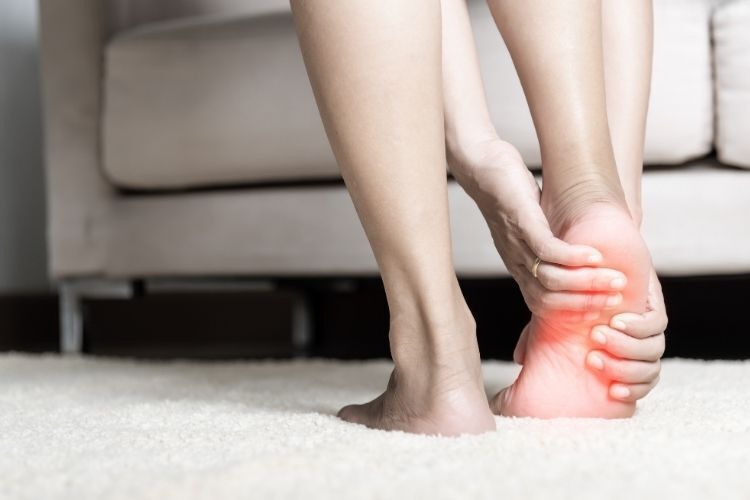
If you've ever taken your first steps in the morning and felt a stabbing pain shoot through your heel, you already know plantar fasciitis doesn't play fair. It's one of the most common causes of heel pain, and for a lot of people, it lingers far longer than it should. The good news is that shockwave therapy for plantar fasciitis has become one of the most effective, evidence backed options for finally breaking the cycle, and it doesn't require surgery, injections, or weeks off your feet.
At Summit Sports and Spine in Lehi, UT, Dr. Jacob Perkins has built his practice around exactly this kind of solution: advanced, targeted care for athletes, weekend warriors, and anyone whose body needs more than a quick adjustment. Shockwave therapy is one of the tools he reaches for most often when plantar fasciitis is holding patients back.
What Is Plantar Fasciitis, Really?
The plantar fascia is a thick band of tissue that runs along the bottom of your foot, connecting your heel bone to your toes. It absorbs shock every time your foot hits the ground, which is a lot of repetitive stress over the course of a day, let alone a lifetime.
When that tissue develops small tears or becomes chronically irritated, the result is plantar fasciitis. It's especially common among runners, people who stand for long shifts, and anyone carrying extra load through the feet, whether that's from weight, footwear, or biomechanics. Left untreated, it can also contribute to a plantar fasciitis heel spur, a small calcium deposit that forms where the fascia pulls on the heel bone.
Why Standard Treatment for Plantar Fasciitis Often Falls Short
Most people try the usual first line of defense: rest, ice, stretching, better shoes, maybe an over the counter insole. These steps genuinely help mild cases. But when the tissue damage is more significant, or the condition has been dragging on for months, plantar fasciitis home treatment alone often isn't enough to fully resolve the problem. The tissue needs something that actively stimulates repair, not just symptom management.
This is where a lot of patients start asking about the best treatment for plantar fasciitis that doesn't involve surgery. Shockwave therapy is frequently the answer.
How Shockwave Therapy Works
Extracorporeal shockwave therapy uses focused acoustic pressure waves delivered through the skin directly to the damaged fascia. It sounds intense, but the mechanism is actually elegant. Those pressure waves create controlled microtrauma in the tissue, and that microtrauma triggers your body's natural healing response.
In practical terms, shockwave therapy increases blood flow to the area, stimulates the production of new collagen, and breaks down chronic scar tissue that's been keeping the fascia inflamed and stiff. Instead of masking the pain, it pushes the tissue toward genuine repair.
Clinical research has shown that extracorporeal shockwave therapy can significantly reduce pain and improve function in chronic plantar fasciitis cases, particularly for patients who haven't responded to conservative treatment for plantar fasciitis after several months. The American Academy of Orthopaedic Surgeons and multiple peer reviewed studies point to shockwave as a legitimate, non-surgical treatment for plantar fasciitis when first line approaches haven't worked.
What to Expect During Treatment
Sessions are quick, typically 15 to 20 minutes, and patients are usually walking normally right afterward. There's no incision, no anesthesia, and no extended recovery period, which is a big part of why shockwave has become such a popular alternative to surgical treatment for plantar fasciitis.
Most treatment plans involve a series of sessions spaced about a week apart. Some patients notice improvement early on, while others feel the full benefit build gradually as the tissue continues to remodel over the following weeks. Mild soreness after a session is normal and typically fades within a day or two.
At Summit Sports and Spine, shockwave is often paired with complementary therapies like class IV laser or targeted soft tissue work through our shockwave and EMTT program, which combines extracorporeal shockwave with electromagnetic transduction therapy for an even more comprehensive approach to stubborn heel and foot pain.
Who Is a Good Candidate?
Shockwave therapy tends to work best for patients who have dealt with plantar fasciitis symptoms for at least a few months and haven't found lasting relief through rest, stretching, or basic chiropractic treatment for plantar fasciitis alone. It's also a strong option for people who want to avoid the downtime and risks that come with a more invasive procedure.
Athletes in particular benefit from this approach. Runners, hikers, and anyone training regularly in the Lehi, Alpine, and Highland area often can't afford weeks of downtime, and shockwave therapy is designed to fit into an active lifestyle rather than interrupt it.
A Whole Body Approach to Heel Pain
Plantar fasciitis rarely exists in isolation. Tight calves, limited ankle mobility, and compensations elsewhere in the kinetic chain frequently contribute to the problem. That's why Dr. Perkins, a Doctor of Chiropractic trained at Palmer College of Chiropractic with a background in sports medicine and functional rehabilitation, evaluates the whole picture rather than just the point of pain.
Depending on what's driving your specific case, your plan might include shockwave therapy alongside Active Release Technique, Functional Range Conditioning, or dry needling, all aimed at restoring proper movement patterns so the fascia isn't under constant strain once it heals.
Getting Back on Your Feet, Literally
Heel pain has a way of quietly shrinking your world. You stop taking the walks you used to enjoy, you dread the first steps out of bed, and you start planning your day around avoiding pain rather than living fully in it. Shockwave therapy offers a real path forward, one grounded in how your body actually heals, not just how it copes.
If you've been searching for a treatment for plantar fasciitis that addresses the root cause instead of just quieting the symptoms, it's worth having a conversation about whether shockwave therapy is the right fit for you. Schedule a consultation with Summit Sports and Spine in Lehi, UT, and let's talk about getting you back to full strength, one confident step at a time.

.jpg)
